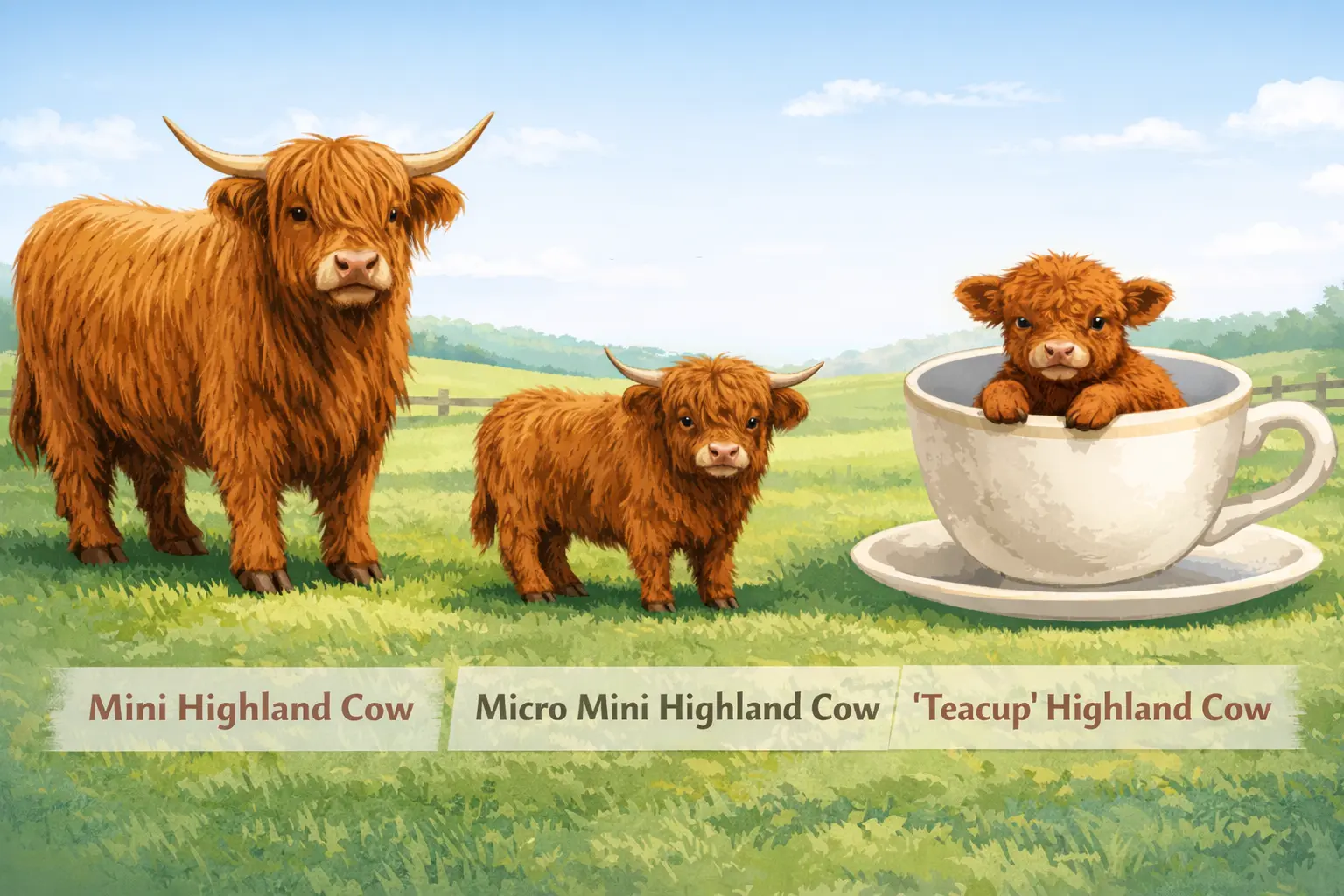
The Scottish mini Highland cow is a modern version of one of the oldest and most famous types of cattle in the world. The mini Highland cow comes from the rugged Scottish Highlands and is known for its long horns, shaggy hair, and calm personality. Understanding its origin, history, and traits helps explain why this breed has become so popular with small farms and lifestyle homesteads.
This blog talks about the Scottish roots of Highland cattle, their history, how miniature breeding came to be, and the distinctive qualities that set mini and micro Highland cows apart from other breeds.
Quick History: Highland cattle have over 800 years of history in Scotland. Modern mini Highland cows were developed in the late 20th century through selective breeding, preserving ancient characteristics in a smaller, farm-friendly size.
Origins of Highland Cattle in Scotland
Highland cattle are among the oldest registered cattle breeds in the world. Their history extends back over 800 years to the Scottish Highlands and Western Isles, where they developed unique characteristics perfectly suited to their harsh environment.
Why Highland Cattle Developed in Scotland
The Scottish Highlands presented unique challenges that shaped the evolution of Highland cattle. This environment is characterized by:
Harsh Weather
Cold temperatures, heavy rainfall, and fierce winds required cattle with exceptional cold tolerance.
Sparse Grazing
Limited vegetation on rocky terrain demanded efficient metabolism and ability to thrive on rough forage.
Rugged Terrain
Rocky, uneven ground required strong hooves and sure-footed navigation abilities.
Natural Selection
Only the hardiest cattle survived, creating a naturally resilient breed over centuries.
Highland cattle evolved naturally to survive these conditions. Their thick coats, strong hooves, and efficient metabolism allowed them to thrive where other cattle could not. These survival traits made them invaluable to Scottish farmers and crofters who depended on them for survival.
Genetic Legacy: The modern mini Highland cow maintains these survival traits in a smaller frame, proving that size reduction doesn't mean losing the breed's fundamental strengths.
Traditional Highland Cattle: The Foundation Breed
Before miniature breeding existed, Highland cattle were traditionally larger animals that served multiple purposes on Scottish farms and crofts.
Traditional Highland cattle were:
- Taller and heavier than modern miniature versions
- Multi-purpose animals used for beef, milk, and draft work
- Valued for resilience rather than high productivity
- Essential to survival in the harsh Highland environment
Traditional Highland Cow Characteristics
Traditional vs Mini Highland Cattle Comparison
| Characteristic | Traditional Highland | Mini Highland | Micro Highland |
|---|---|---|---|
| Height | 48-55 inches | 42-48 inches | 36-42 inches |
| Weight | 1,200-1,800 lbs | 600-800 lbs | 400-600 lbs |
| Horns | Long, curved | Long, curved (proportional) | Long, curved (proportional) |
| Coat | Double-layered | Double-layered | Double-layered |
| Development | Ancient (800+ years) | Modern (late 20th century) | Modern (21st century) |
These traditional cattle formed the genetic foundation for today's mini and micro Highland cow lines. Responsible breeders carefully preserve these foundational characteristics while reducing overall size.
How Mini Highland Cows Were Developed
The mini Highland cow did not originate in ancient Scotland. Instead, miniature breeding began in the late 20th century, primarily in North America, driven by demand from small-acreage farmers and hobby farm enthusiasts.
Goals of Miniature Breeding
Breeders who developed mini Highland cows focused on specific objectives to create a viable smaller version of the traditional breed:
Miniature Breeding Objectives
-
Preserving classic Highland appearance -
Maintaining the iconic look that makes Highland cattle
recognizable
- Long, curved horns
- Shaggy double coat
- Distinctive head shape
- Traditional color variations
-
Reducing adult size - Creating cattle suitable
for smaller properties
- Gradual size reduction over generations
- Targeting specific height ranges
- Maintaining proportionate build
-
Maintaining strong health - Ensuring
miniaturization didn't compromise vitality
- No dwarfism genes
- Structural soundness
- Reproductive viability
- Longevity preservation
-
Preserving temperament - Keeping the gentle,
docile nature
- Calm disposition
- Good maternal instincts
- Human-friendly behavior
-
Improving farm suitability - Making them
practical for small operations
- Lower feed requirements
- Manageable size for handling
- Suitable for limited acreage
Important Note: Selective breeding—not genetic modification—was used to gradually reduce size over multiple generations. This natural approach takes years but produces healthier, more stable animals.
Micro Highland Cow Development
The micro Highland cow is an extension of miniature breeding, targeting even smaller adult sizes while maintaining breed characteristics and health.
Key Differences in Breeding Focus
Size Priority
Micro lines prioritize further reduced height and weight beyond standard mini classifications.
Verification Critical
Parent size verification becomes even more critical to ensure consistent results.
Health Balance
Health and structural balance must be carefully maintained to avoid problems from extreme miniaturization.
Proportion Focus
Maintaining proper proportions becomes more challenging at smaller sizes.
Because micro Highland cows vary more in size and development, responsible breeding practices are essential to preserve the breed's integrity. Not all breeders who claim to produce "micro" cattle are doing so ethically or with proper health considerations.
Physical Characteristics of Mini Highland Cows
Despite their smaller size, the mini Highland cow closely resembles its traditional Scottish ancestors in appearance and distinctive features.
Key Physical Traits
Distinctive Physical Features
| Feature | Description | Purpose/Benefit |
|---|---|---|
| Height Range | 42-48" (mini), 36-42" (micro) | Manageable size for small properties |
| Weight Range | 400-800 lbs depending on category | Reduced feed costs, easier handling |
| Horns | Long, wide-set, upward curve | Iconic appearance, natural defense |
| Coat | Thick outer layer, soft undercoat | Weather protection, insulation |
| Colors | Red, black, dun, yellow, white, brindle | Natural variation, visual appeal |
Their appearance remains unmistakably Highland, preserving the majestic look that has made these cattle famous worldwide. The miniaturization process has reduced size without diminishing the breed's iconic visual impact.
Highland Cattle Color Variations
- Red: Most common color, ranging from light ginger to deep russet
- Black: Solid black coat, often with lighter points
- Dun: Grayish-brown color, sometimes with darker markings
- Yellow: Light tan to golden shades
- White: Cream to pure white (less common)
- Brindle: Striped pattern mixing colors (rare and highly valued)
Temperament and Behavior
One reason the mini Highland cow has grown in popularity is its exceptional temperament—a trait that was essential in traditional Scottish farming and remains valuable today.
Behavioral Traits
Calm & Docile
Generally peaceful and easy to handle with proper socialization from birth.
Curious Nature
Inquisitive but not aggressive. They investigate their surroundings with interest.
Maternal Instincts
Strong mothering abilities with protective but not overly aggressive care of calves.
Human Adaptability
Good adaptability to human interaction when raised with regular, gentle handling.
These traits were essential for survival in traditional Scottish farming, where cattle needed to be manageable without extensive handling facilities. Crofters and farmers often worked closely with their animals, requiring cattle that were cooperative and trustworthy.
Temperament Heritage: The gentle disposition of mini Highland cows isn't accidental—it's the result of centuries of selection by Scottish farmers who needed cattle they could trust and work with safely.
Adaptation to Modern Farming
While originally bred for the rugged landscapes of Scotland, mini Highland cows adapt remarkably well to modern farming environments across diverse climates and management systems.
Why They Fit Small Farms
Modern Farm Advantages
-
Lower feed requirements than full-size cattle
- Efficient metabolism inherited from Scottish ancestors
- Ability to thrive on moderate-quality forage
- Reduced grain needs compared to commercial breeds
-
Efficient grazing habits
- Browse vegetation other cattle avoid
- Clear brush and undergrowth effectively
- Less selective than commercial breeds
-
Cold and heat tolerance
- Thick coat provides exceptional cold protection
- Adapt well to hot climates with proper shade
- Natural resilience to weather extremes
-
Long lifespan
- Often live 15-20 years with proper care
- Productive breeding life of 10-12 years
- Better return on initial investment
-
Low-maintenance health
- Hardy constitution reduces veterinary costs
- Natural resistance to common cattle ailments
- Strong immune systems from centuries of natural selection
Size Consideration: A micro Highland cow may require additional winter shelter due to smaller body mass and reduced ability to generate body heat compared to larger animals.
Highland Cattle Heritage Today
Highland cattle are protected and registered by international breed societies that work to preserve the integrity and characteristics of this ancient breed. Miniature variations maintain strong ties to this heritage when bred responsibly.
Preserving Breed Integrity
Responsible mini Highland cow breeding focuses on preserving:
Genetic Health
Maintaining diverse genetics while avoiding inbreeding and genetic defects.
Traditional Structure
Keeping proper proportions, strong bones, and functional conformation.
Breed Temperament
Preserving the calm, friendly disposition that defines Highland cattle.
Natural Hardiness
Maintaining the resilience and adaptability of traditional Highland cattle.
This careful preservation is critical to honoring the breed's Scottish origins and ensuring that mini Highland cows remain true representatives of their ancient heritage, just in a more manageable size.
Experience Scottish Heritage at MooMuffin Acres
See how we preserve traditional Highland cattle characteristics in our mini Highland cow breeding program. Visit our farm to meet these living links to Scottish history.
Schedule Your VisitThe Role of Highland Cattle in Scottish Culture
Beyond their practical value, Highland cattle hold deep cultural significance in Scotland:
- Symbol of Scotland: Highland cattle are an internationally recognized symbol of Scottish heritage and rural tradition
- Economic importance: Historically provided meat, milk, leather, and draft power to remote communities
- Cultural identity: Integral to Highland clan systems and crofting way of life
- Tourism icon: Today attract visitors from around the world to Scotland
- Art and literature: Featured prominently in Scottish art, poetry, and cultural expressions
Final Thoughts
The Scottish mini Highland cow represents a thoughtful evolution of a historic breed. While mini and micro Highland cows are modern developments, they remain deeply connected to the rugged cattle that once roamed the Scottish Highlands and sustained isolated communities through harsh winters.
When bred ethically with attention to health, structure, and temperament, these miniature cattle preserve centuries of heritage in a size suited for today's small farms and lifestyle properties. They bring a piece of Scottish history to properties around the world, maintaining the characteristics that made Highland cattle famous while adapting to modern farming needs.
Living History: Every mini Highland cow carries 800+ years of Scottish heritage in its genes. Owning one isn't just about having livestock—it's about being a steward of an ancient breed's future.
At MooMuffin Acres, we take our role as Highland cattle breeders seriously. We're not just producing smaller cattle—we're preserving a piece of living history and honoring the Scottish farmers who developed this remarkable breed over centuries.
FAQs: Scottish Mini Highland Cow
1. Did mini Highland cows originate in Scotland?
No. Traditional Highland cattle originated in Scotland over 800 years ago, while mini Highland cows were developed later (late 20th century) through selective breeding, primarily in North America.
2. Are mini Highland cows a separate breed?
No. They are a size variation of traditional Highland cattle, not a separate breed. They maintain the same genetic heritage and characteristics as full-size Highland cattle.
3. What is the difference between a mini and micro Highland cow?
A micro Highland cow is smaller than a mini (36-42 inches vs 42-48 inches at shoulder) and requires more careful size verification and breeding management to maintain health and structure.
4. Do mini Highland cows still have Scottish genetics?
Yes. They descend directly from traditional Scottish Highland cattle and maintain the same genetic heritage, just selectively bred for smaller size over multiple generations.
5. Why were Highland cattle important in Scottish history?
They were valued for their resilience in harsh conditions, providing meat, milk, draft power, and leather to remote Highland communities. They could survive where other cattle breeds failed.
6. Are mini Highland cows hardy like traditional Highland cattle?
Yes. They retain strong cold tolerance, weather resistance, and general hardiness inherited from their Scottish ancestors. Size reduction hasn't compromised their fundamental resilience.
7. How long do mini Highland cows live?
With proper care, they often live 15-20 years, similar to traditional Highland cattle. This longevity makes them excellent long-term farm companions.
8. Are micro Highland cows historically traditional?
No. Micro Highland cows are a modern breeding development (21st century), not part of ancient Highland farming. They represent the newest extension of miniaturization efforts.
9. Can mini Highland cows live in hot climates?
Yes, they adapt surprisingly well to warmer climates with proper shade and water. While their thick coats suggest cold-weather animals, they're remarkably adaptable to various climates.
10. What makes Highland cattle different from other breeds?
Their unique combination of long horns, double-layered coat, excellent foraging ability, calm temperament, and exceptional hardiness sets them apart. These traits developed over 800 years in Scotland's harsh environment.