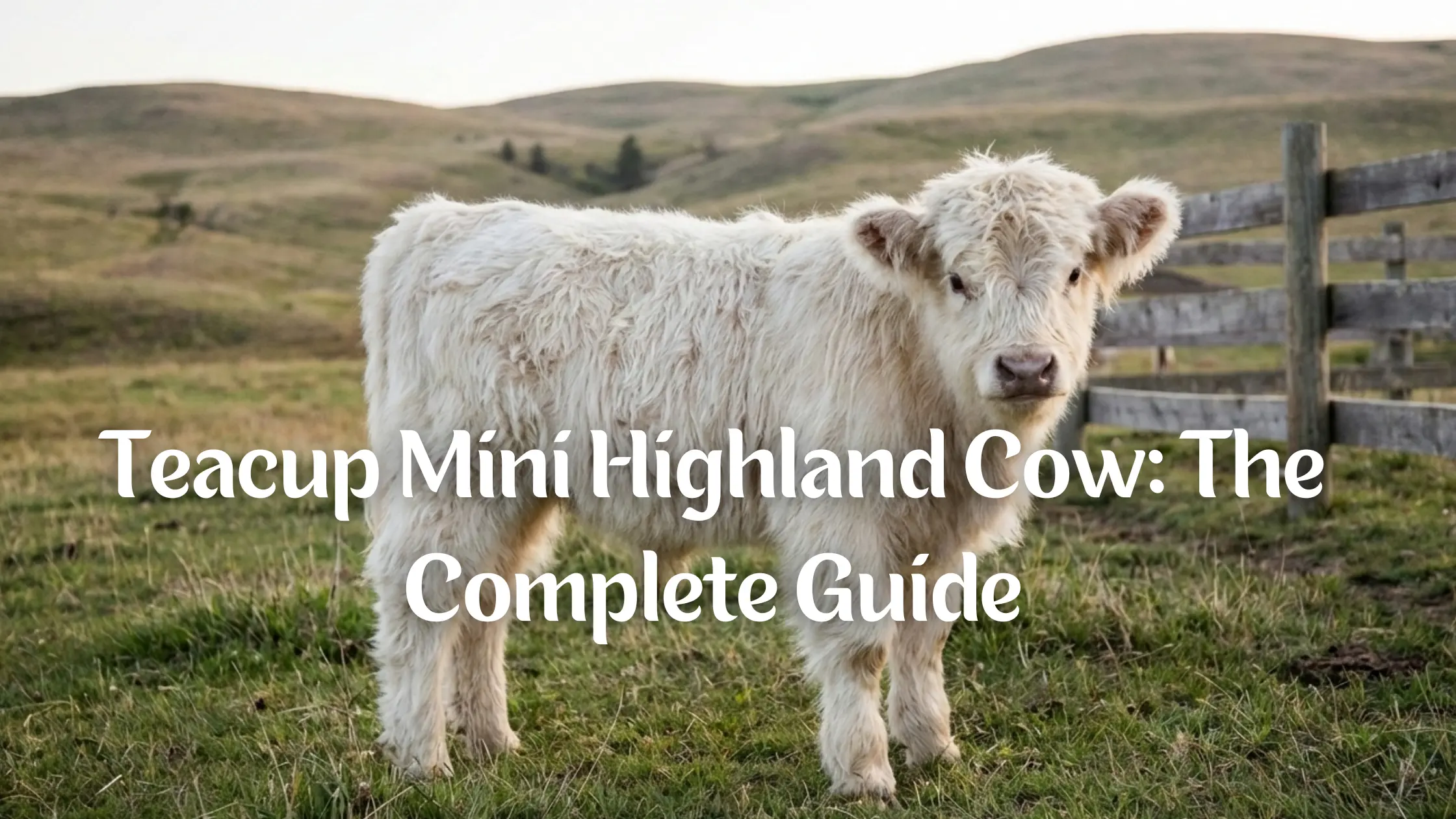
The term "teacup mini Highland cow" has spread across social media and internet listings. Cute images, strong size claims, and premium prices make many consumers ask the same questions:
- Is a teacup mini Highland cow real?
- How much is a mini Highland cow in 2026?
- What is the true mini Highland cow cost?
This guide explains the reality behind teacup claims, how they compare to mini Highland cows and micro Highland cows, and what purchasers could reasonably expect to pay.
Critical Truth: "Teacup mini Highland cow" is NOT an officially recognized size or breed. It's a marketing term used to justify inflated prices and unrealistic expectations. No healthy adult Highland cow stays "teacup-sized."
What Is a Teacup Mini Highland Cow?
Let's be direct and honest:
"Teacup mini Highland cow" is not an officially recognized size or breed.
There is no genuine registry or breeding standard that specifies a teacup Highland cow. The term is mainly used for:
- Very young calves - Photographed at their cutest stage to imply permanent size
- Naturally small individuals - Without proven genetics or size consistency
- Marketing descriptions - Meant to justify higher prices through emotional appeal
- Misleading claims - That ignore basic cattle biology and growth patterns
Biological Reality: A healthy adult Highland cow—mini or otherwise—does not stay teacup-sized. Claims otherwise defy cattle genetics and physiology.
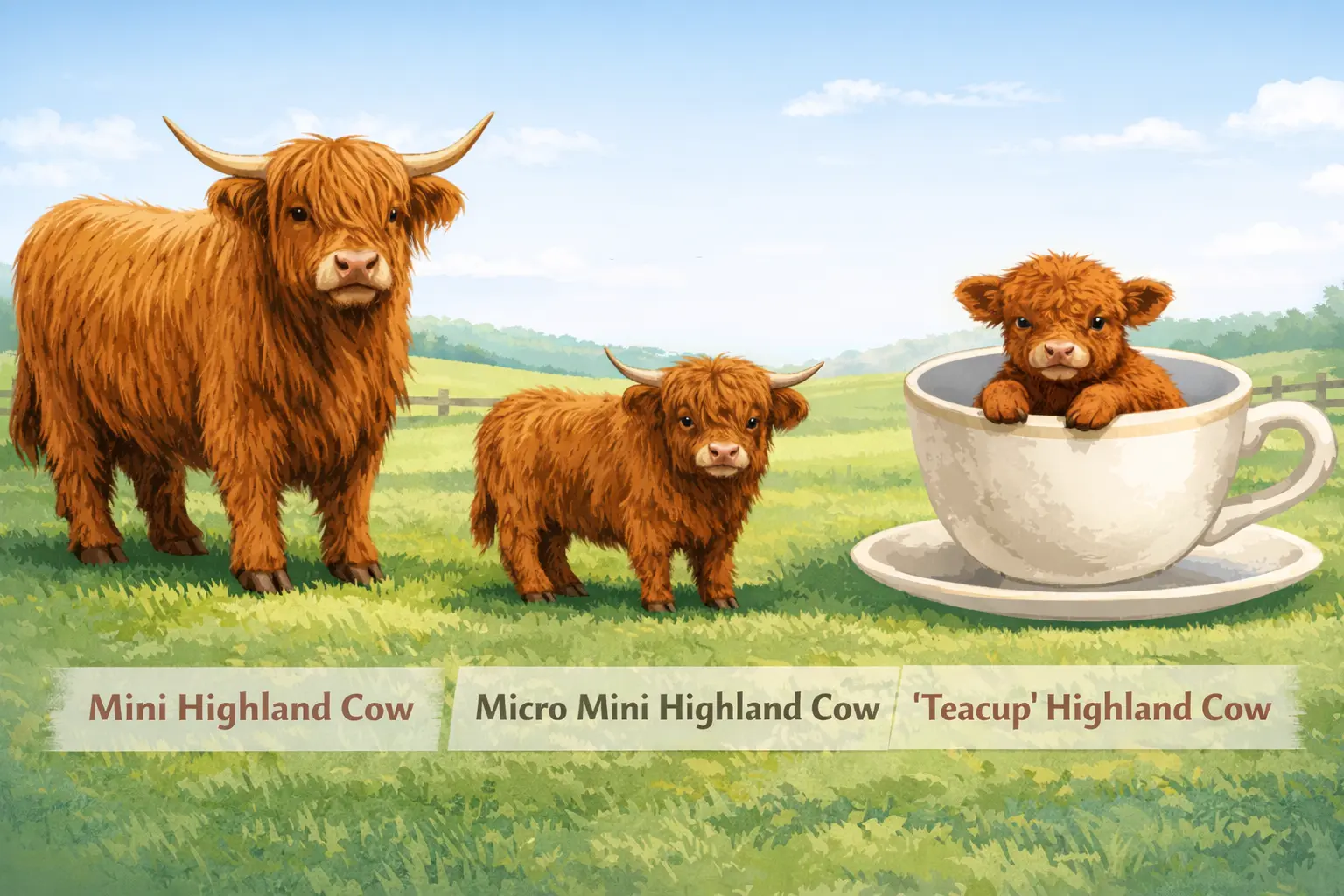
Mini vs Micro vs "Teacup" Highland Cows
Understanding these terms prevents costly mistakes and protects you from misleading marketing. Here's the complete breakdown:
Size Classifications: Reality vs Marketing
| Category | Adult Height | Adult Weight | Status |
|---|---|---|---|
| Mini Highland Cow | 42-48 inches | 600-800 lbs | ✓ Established & Predictable |
| Micro Highland Cow | 36-42 inches | 400-600 lbs | ⚠ Requires Verification |
| "Teacup" Highland Cow | No defined size | No reliable range | ✗ Marketing Term Only |
Mini Highland Cow
- Adult height: 42-48 inches
- Weight: 600-800 lbs
- Most established and predictable size
- Best choice for most buyers
- Lower risk, proven genetics
Micro Highland Cow
- Adult height: 36-42 inches
- Weight: 400-600 lbs
- Smaller footprint, higher price
- Requires careful breeder verification
- More variable outcomes
"Teacup" Highland Cow
- No defined adult size
- No reliable weight range
- Marketing term only
- Highest buyer risk
- Often grows to mini or micro size
Key Truth: In practice, most "teacup" cows grow into either mini or micro Highland cows. You're paying premium prices for standard miniature cattle.
How Much Is a Mini Highland Cow in 2026?
This is one of the most sought questions—and pricing varies significantly based on honesty and genetics. Here's what you need to know about current market prices:
Average Purchase Prices (USD)
2026 Pricing Reality Check
| Type | Price Range | Value Assessment |
|---|---|---|
| Mini Highland Cow | $3,500 - $8,000 | ✓ Fair market value |
| Micro Highland Cow | $4,500 - $10,000+ | ⚠ Premium but justified |
| "Teacup" Mini Highland Cow | $6,000 - $12,000+ | ✗ Often inflated |
Price Warning: Many "teacup" listings are priced higher without delivering true size assurances. You're often paying $2,000-$4,000 extra for a marketing term, not a different animal.
Why "Teacup" Mini Highland Cows Cost More
The higher mini Highland cow cost associated with teacup claims usually comes from psychological factors rather than biological reality:
Scarcity Marketing
Creating false urgency around "rare" animals that don't actually exist.
Emotional Appeal
Using cute calf photos to trigger impulse buying at inflated prices.
Buyer Inexperience
Exploiting lack of knowledge about cattle growth and genetics.
No Verification
Avoiding proof of adult size through vague promises and limited documentation.
Important Reminder: Smaller doesn't always mean better—and it certainly doesn't always mean healthier. Extreme miniaturization can come with health complications.
What Actually Determines the Cost of a Mini Highland Cow?
When evaluating the cost of a mini Highland cow, focus on facts, not labels. Here are the legitimate factors that should influence pricing:
1. Parent Size & Genetics
- Proven mini or micro parents = Higher value and justified pricing
- Unknown or full-size parents = Higher risk and should be lower priced
- Multiple generations of documentation = Premium pricing warranted
- Genetic testing for dwarfism = Added value and buyer protection
2. Age
Age-Based Pricing
| Age | Cost Range | Risk Level |
|---|---|---|
| Young Calf | $3,500 - $5,500 | High size uncertainty |
| Weaned Juvenile | $5,000 - $7,500 | Moderate uncertainty |
| Proven Adult | $7,000 - $10,000+ | Zero size uncertainty |
Adults cost more but remove size uncertainty completely. You're paying for certainty and peace of mind.
3. Gender
- Females (heifers) cost more due to breeding potential - typically 20-30% higher
- Steers are usually the most affordable option - ideal for pets
- Bulls command premium prices only with proven genetics and offspring
4. Breeder Transparency
Ethical breeders provide clear documentation and honest expectations. This transparency should be reflected in stable, fair pricing:
What Ethical Breeders Provide
- Parent measurements - Actual adult heights and weights, not estimates
- Growth history - Documentation of offspring development
- Honest size expectations - Realistic ranges, not guarantees of extremes
- Health records - Complete vaccination and veterinary history
- Genetic testing - Results for hereditary conditions
- References - Contact information for previous buyers
This directly affects long-term value and health outcomes. Pay more for transparency, not for marketing buzzwords.
Ongoing Ownership Cost (Reality Check)
Buying is only the beginning. Understanding the true cost of ownership helps you budget appropriately:
Yearly Cost Breakdown (Per Cow)
Annual Ownership Expenses
| Expense | Estimated Cost | Notes |
|---|---|---|
| Hay & Feed | $600 - $1,200 | Varies by region and quality |
| Minerals & Supplements | $100 - $200 | Essential for health |
| Vet Care | $150 - $300 | Routine only |
| Fencing & Shelter (averaged) | $300 - $600 | Maintenance and repairs |
| Total Annual Cost | $1,200 - $2,300 | Per animal |
A micro Highland cow may eat slightly less—but savings are modest, usually only 10-20% on feed costs. Don't expect dramatic reductions in ongoing expenses.
Lifetime Investment: Over 15-20 years, expect total costs of $25,000-$40,000+ including purchase price and annual care. Plan accordingly.
Should You Buy a "Teacup" Mini Highland Cow?
The short answer is no—but here's the detailed guidance to help you make the right decision:
Consider a Mini or Micro Highland Cow If You Want:
Predictable Size
Know exactly what adult size to expect based on proven genetics.
Long-Term Health
Animals bred for health and structure, not extreme size reduction.
Resale Value
Legitimate mini/micro classifications maintain market value.
Breeding Potential
Proven genetics that produce consistent offspring.
Avoid "Teacup" Listings If:
- ✘ Adult size is guaranteed without proof or parent verification
- ✘ Parents are unavailable to see or measure in person
- ✘ Pricing relies on buzzwords instead of documented data
- ✘ Breeder becomes defensive when asked detailed questions
- ✘ Only photos of very young calves are provided
- ✘ Claims of adult animals under 36 inches at shoulder
- ✘ No references from previous buyers available
- ✘ Urgent pressure to buy without proper due diligence
Buyer Protection: Healthy cattle are small, not extreme. Be skeptical of any breeder promising adult Highland cows that stay under 36 inches or weigh less than 400 pounds.
Get Honest Guidance on Mini Highland Cows
Tired of misleading "teacup" claims? Visit MooMuffin Acres for transparent pricing, proven genetics, and realistic expectations. See adult parent animals before you buy.
Schedule Your Farm VisitRed Flags in "Teacup" Listings
Protect yourself by recognizing these common warning signs in teacup Highland cow listings:
Warning Signs to Watch For
- 🚩 Extreme size promises - "Will stay under 30 inches!" or "Smaller than a large dog!"
- 🚩 Only calf photos - No adult animals shown from breeding program
- 🚩 Vague genetics - "From mini parents" without specific measurements
- 🚩 Premium teacup pricing - $8,000-$12,000+ with no proof of genetics
- 🚩 Emotional manipulation - "These go fast!" or "Last teacup available!"
- 🚩 No farm visits - Delivery only, can't see facilities or parents
- 🚩 Social media only - No established website or verifiable business
- 🚩 Defensive responses - Gets angry when asked for documentation
Final Verdict (2026 Buyer Advice)
If you're asking how much is a mini Highland cow, the honest answer is:
- Expect to pay $3,500-$8,000 for a well-bred mini Highland cow
- $4,500-$10,000+ for a true micro Highland cow with proven genetics
- Be extremely cautious of "teacup" pricing without genetics to support it
The mini Highland cow cost should reflect health, structure, and transparency—not hype, marketing buzzwords, or unrealistic size promises.
Our Promise: At MooMuffin Acres, we never use the term "teacup" because it's misleading. We provide accurate measurements of parent animals, realistic size expectations, and honest pricing based on proven genetics—not marketing myths.
Remember: you're making a 15-20 year commitment and investing tens of thousands of dollars over the animal's lifetime. Don't let clever marketing or cute calf photos rush you into a decision you'll regret. Take your time, visit farms, see adult animals, and make an informed choice based on facts.
FAQs: Teacup Mini Highland Cows
1. Are teacup mini Highland cows real?
No. "Teacup" is a marketing term, not a recognized size category. No breeding registry or official organization recognizes "teacup" Highland cattle. Any breeder using this term is employing marketing tactics rather than biological facts.
2. How much is a mini Highland cow in 2026?
Most legitimate mini Highland cows cost between $3,500 and $8,000, depending on age, genetics, and gender. Beware of prices significantly outside this range.
3. Why do teacup mini Highland cows cost more?
Higher prices are often driven by marketing and buyer inexperience, not verified smaller adult size. You're paying extra for a label that has no biological meaning.
4. Is a micro Highland cow smaller than a mini Highland cow?
Yes. A micro Highland cow is typically shorter (36-42 inches) and lighter (400-600 lbs) than a mini (42-48 inches, 600-800 lbs). However, both are recognized informal categories, unlike "teacup."
5. What is the true cost of a mini Highland cow long-term?
Over 15-20 years, total ownership costs can exceed $25,000-$40,000 including purchase price, annual feed, veterinary care, and infrastructure maintenance.
6. Can a teacup Highland cow stay tiny forever?
No. No healthy Highland cow remains teacup-sized as an adult. Any claim otherwise defies basic cattle biology and growth patterns. Adult Highland cattle, even minis, are substantial animals.
7. Are mini Highland cows cheaper to maintain than standard cows?
Yes, but they are still livestock—not low-cost pets. Expect to spend $1,200-$2,300 annually per animal on feed, care, and maintenance.
8. How can I avoid overpaying?
Always verify parent size in person, ask for actual measurements (not estimates), avoid size guarantees without proof, and never pay "teacup" premiums without seeing multiple adult animals from the breeding program.
9. What size should I realistically expect?
For a legitimate mini Highland cow, expect 42-48 inches at the shoulder as an adult. For a micro, expect 36-42 inches. Anything smaller should be viewed with extreme skepticism.
10. Where can I buy a legitimate mini Highland cow?
Seek established breeders with transparent practices, farm visits allowed, adult animals visible, complete documentation, and references from previous buyers. Avoid social media-only sellers making extreme size claims.